Friday, September 27, 2013

Rogers partners with big 5 U.S.publishers on digital newsstand service Next Issue Canada

A couple of years ago Brian Segal, then the president of Rogers Publishing, said on a public stage how he admired Next Issue Media  in the U.S. and thought that it was pursuing a business model that might work for mainstream magazines in this country, and Rogers in particular. 

Next Issue was a joint venture formed in 2009 by five leading U.S. publishers -- Condé Nast, Hearst, Meredith, NewsCorp, and Time Inc.-- a digital subscription service that offered unlimited access (only in the United States) to online magazines for a monthly flat fee. (It's sometimes called the "Netflix of magazines".) 

Now it has been announced that Rogers has joined as a partner with the U.S. enterprise and has created Next Issue Canada  . And it would seem it is so committed to the idea that Ken Whyte has been appointed president of the new venture, relinquishing his role as head of Rogers Publishing Limited and its consumer and b2b magazine portfolio. He had been named to the job in June 2011, succeeding Segal, after a steady rise.  

Whyte and Melissa Rogers (daughter of the late owner of the company Ted Rogers) will take seats on the board of Next Issue. A story in the Globe and Mail quoted Whyte as saying Rogers had made an "eight digit investment" and was an equal partner in the venture. The U.S. partners will see it as a way of gaining access to all of Rogers's digital channels through its broadcast, sports and other internet properties.
"The Next Issue platform is the future of magazine content consumption. It was the first all-you-can-read subscription digital magazine service, serving up the world's best magazines in a format that enhances what readers love about magazines: the sensory experience, the stunning visuals, in-depth content and the discovery of the unexpected," said Whyte [in a release]. "Next Issue Canada delivers added value with an all-you-can-read experience. It retains the best of print while making the content come to life vividly, giving readers a more personalized, interactive experience. As a result, the magazine of today is even more powerful than the magazine of yesterday."
Ken Whyte to head
Next Issue Canada
Which is ironic given that Rogers is one of the biggest players on Canadian newsstands and was, at one time (through its Coast to Coast division) one of the principal distributors. And given that Rogers direct mail subscription service remains one of the principal means through which physical subscriptions (both Canadian and U.S.) have been and are sold to Canadian readers. 

In the release, Rogers said the exclusive partnership with Next Issue Media would be made available free for a two-month trial exclusively to Rogers wireless and cable customers on tablets (iPads, Android devices and starting October 15; it would then be rolled out to all Canadians December 15 and give subscribers unlimited access to more than 100 Canadian and U.S. titles for one monthly payment of $9.99 for all monthly magazines ($14.99 for all weekly publications such as Maclean's). And Rogers titles will be available to U.S. Next Issue subscribers.


Initially, Next Issue Canada will be an English service, with a French version to  follow in 2014. 


It remains to be seen how quickly digital editions will be taken up by Canadian subscribers. Right now, the three leading titles are Canadian House & Home with 11,000, Readers Digest with 6,700 and Maclean's magazine with 5,600 (less than 2% of its print and newsstand sales). 

Labels: ,

Thursday, July 11, 2013

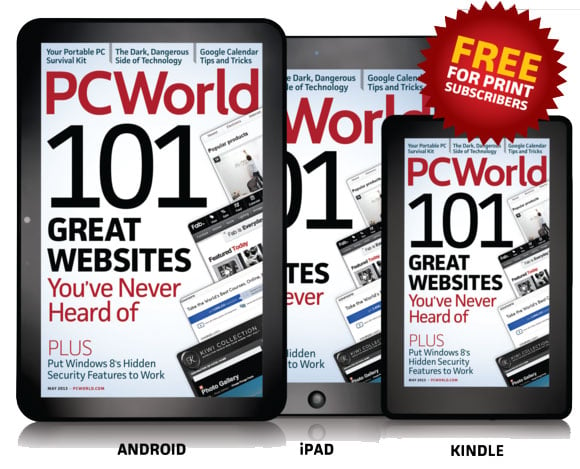
After three decades, PCWorld to be digital-only

PCWorld, in a decision that has several convoluted layers of irony, is discontinuing its print edition and will, after the August issue, be only available in digital form. It has 339,000 print subscribers, but nevertheless after three decades in print, its publisher IDG decided the future was digital. No staff impacts are expected.
"Both technology users and marketers have led the way in the shift from print to online and our decision to end 30 years of PCWorld print publications reflects their preferences," said Bob Carrigan, CEO, IDG Communications in a prepared statement. "PCWorld colleagues in the U.S. will now focus on innovative digital-first editions featuring interactive multimedia presented in high resolution."

Labels:

Thursday, October 18, 2012

Newsweek sails into an all-digital future;
ends print edition

[This post has been updated] The announcement today of the ending of the print edition of Newsweek magazine comes with a crashing sense of inevitability. But longtime readers and magazine people can be forgiven for feeling glum. The message from Tina Brown, editor in chief and founder of The Newsweek Daily Beast Company, strove for a positive note, saying the launching of a single, worldwide edition of the magazine was aimed at highly mobile, opinion-leading readers. Tablet use among Newsweek readers has grown along with tablet use generally and editorial excellence would be sustained through swift, easy, digital distribution, she said.
"Exiting print is an extremely difficult moment for all of us who love the romance of print and the unique weekly camaraderie of those hectic hours before the close on Friday night. But as we head for the 80th anniversary of Newsweek next year we must sustain the journalism that gives the magazine its purpose—and embrace the all-digital future."
She said a tipping point had been reached.
"Four years ago we launched The Daily Beast. Two years later, we merged our business with the iconic Newsweek magazine—which The Washington Post Company had sold to Dr. Sidney Harman. Since the merger, both The Daily Beast and Newsweek have continued to post and publish distinctive journalism and have demonstrated explosive online growth in the process. The Daily Beast now attracts more than 15 million unique visitors a month, a 70 percent increase in the past year alone—a healthy portion of this traffic generated each week by Newsweek’s strong original journalism."
Richard Adams, a Guardian reporter, commented acidly on Twitter: " And in other news, the Titanic is transitioning to an all-underwater format."

Read more »

Labels: , ,

Thursday, June 21, 2012

Dow Jones closes Smart Money print version in favour of digital

Smart Money magazine is doing away with its print edition effective with the August issue and putting all of its energy and investment into building SmartMoney.com. According to a story in minonline, the publication will expand its digital team to 15 people. Twenty-five print magazine staffers will lose their jobs (though they can apply for the new digital positions).
Smart Money is wholly owned by Dow Jones & Co., publishers of the Wall Street Journal. It originally was a joint venture started in 1992 between Dow Jones and Hearst Corporation ( current Hearst president David Carey was the first publisher.) The magazine has been losing print ads and 2012 so far is down 9.3%.
In a statement regarding the decision to fold the magazine, Dow Jones & Co. editor-in-chief Robert Thomson said in a statement: “It’s clear that the volatility of markets and asset classes has increased the need for rapid delivery of personal finance intelligence, so we will be expanding our team and presence on the Web.”

Labels: ,

Wednesday, April 04, 2012

Experimental "Netflix for magazines" would deliver digital mags to tablets for a flat fee

Like cities building sidewalks where people  wear a rut, magazine publishers are apparently responding to readers' actual behaviour with something that could be called Netflix for Magazines.
An interesting column by Peter Kafka at All Things Digital discussed how Next Issue Media, the large digital magazine consortium (which has not been making very big waves in the business so far) have come up with a plan to deliver all the magazines people want to their tablets for a flat fee of $10 or $15. It's early days and it's experimental, but so far this is what it looks like: 
It would require an app that would only work with Android tablets running Honeycomb; only 32 titles from four, admittedly big, publishers are so far signed on; and if you want both print and digital, there is no such bundling.
The idea is that publishers would share revenue based on the time that consumers spend with each magazine but, like NIM's current business model, mostly it will be paid for by advertising. As Kafka points out, faced with a rather tepid uptake of tablet magazines by consumers (less than 1% of circulation)  the idea makes a key concession by not requiring them to commit to any particular title and to mix and swap out magazines at will.

Labels: , ,

Wednesday, June 22, 2011

Cardholders will access full digital magazines at their local branch library

If you think the digital tsunami is sweeping over magazine publishers, consider the way the wave is affecting public libraries. A story on Folio: reports on a new partnership between Zinio (which works with Magazines Canada already on delivering digital issues of members magazines) and Recorded Books (a leading publisher of audiobooks) that will grant library visitors access to digital magazines with the use of their library card. 
Zinio announced today its partnership with Recorded Books, making thousands of digital magazines accessible in public libraries throughout the US, Canada, Australia and UK.
“People love going to their public library to read a large selection of magazines, but printed copies can easily get damaged, lost or destroyed,” said Rich Freese, president and CEO, Recorded Books.
Library patrons can browse Zinio’s page-for-page platform of popular titles like Consumer Reports, Car & Driver, Good Housekeeping, The Economist, ESPN Magazine and Esquire.
Functional on both Mac and PC operating systems, Zinio for Libraries will feature tools that include key word article search and interactive elements such as audio and video.
Recorded Books will launch the program at the American Libraries Association conference in New Orleans, which is being held June 24 through June 27.

Labels: , ,

Quote, unquote: For trade magazines, not so easy shucking print

"I don't know any publishers who are talking seriously now about a wholesale move to web only, but a lot of that is due to scale. If you own 200 titles and one goes web only well you still have the printing and distribution costs of 199 other titles."
--Douglas McCabe of Enders Analysis, quoted in a story in the Guardian about the future of trade magazines. The article uses as examples a number of high profile switchovers from print to online, but also gives examples of where the "comfort of print" still has a lot of staying power.

Labels: , ,

iPad magazine adoption is a little bit of history repeating itself: CJR

The adoption of iPad magazines is following a similar trajectory to that of other major publishing formats going back generations, says a story from the Columbia Journalism Review, cautioning that looking at falling sales figures over a short span doesn't really reflect the longer-term impacts.
iPad magazines are not stumbling for the exact same reasons that the first books, print magazines, or “web logs” were slow out of the gate—each new platform had and has its own cultural, political, and technological challenges. But there are similarities between how those new technologies were received in the public eye and mind then that suggest the iPad magazine, rather than being in dire straits, is simply following a well-trod path.
The bend in that path that we’re still waiting for is the one where cheaper prices, wider availability, and normalization mean the new publishing platform takes off.
The story points to the fact that, while history doesn't necessarily repeat itself, there are interesting analogies. Paper was once extremely expensive and hard to get, which ensured it was an elite product for some time, but that as it became less expensive, its use in disseminating printed material became more widespread. Newspapers proliferated only when availability, affordability and literacy enabled them to.
The story of magazines follows a similar plot. While newspapers focused on the news, magazines were largely considered a frivolity for the leisured middle class. Despite their physical appeal, adoption was limited. What factors changed that? The same factors that helped the printing press and newspaper hit mass market: a cultural shift and increased distribution. People had more leisure time and magazines were able to offer more value—including photographs and illustrations, for example—at a lower cost.
Digital magazines are less a technological revolution than a portable form of something that already exists, says Zachary Sniderman.
The final test for iPad magazines will be whether, like newspapers and magazines and blogs and even Gutenberg’s press, people will become habituated to its new format. The success of the iPad will likely come down to whether we buy its distribution model and accept it into the culture, or decide that iPads, tablets, and their magazines, really are just a gimmick.

Labels: , ,

Friday, May 27, 2011

Design Edge magazine launches paid iPad and iPhone editions

 
Design Edge magazine has launched an iPad and iPhone verison of its bimonthly print publication, effective with its May/June 2011 issue (current). According to a story in Masthead, Design Edge's sister (online) title, the launch is timed for the May/June cover story about "Design and the move to mobile".
The tablet edition was produced through Canadian magazine distributor Disticor, which has partnered with U.K.-based company MagazineCloner to offer digital publishing solutions for iPad and iPhone.
The app is downloadable for 99 cents. The first issue is free and $2.99 thereafter.
"We're betting that iPad-equipped designers will spend the equivalent of one latte to get the extra rich media content in the tablet edition," says publisher Doug Bennet. "We'll know in a few months whether that's true or not."

Labels: ,

Wednesday, February 09, 2011

Halilfax-based OptiMYz magazine strikes deal for digital edition

OptiMYz magazine of Halifax, the official magazine of GoodLife Fitness Clubs, has signed a 3-year agreement with Planet-Tek Systems to produce digital edition of the magazine called OptiMYz Interactive. According to a release, the digital version will feature embedded videos, interactive polls and Google Maps store locators.
"OptiMYz Interactive will offer a personal and intimate experience that enables readers to consume articles, provide feedback and share with friends through social applications," says Max Brennan, Publisher of OptiMYz. "It's a perfect complement to our print magazine and it will allow us to connect even more with individuals who are committed to taking charge of their own health and fitness".
The combined readership of the print and digital editions is anticipated to reach 500,000 readers a month. Planet-Tek and OptiMYz will work jointly to sell advertising.

Labels: , ,

Wednesday, December 22, 2010

Maclean's launches iPad digital edition

Maclean's magazine is now available as a digital app on Apple's iPad. The first of the issues is the Newsmakers 2010 issue. While the app can be dowloaded for free from iTunes, each issue dowloaded is priced at $2.99. The inaugural issue contains all of the content of the magazine, plus some things that take advantage of the technology:
  • an animated video cover
  • a video of Justin Bieber performing live
  • a video montage of newsmakers who passed away in 2010
  • Ability to share articles via Twitter, Facebook, and email
  • Viewing the entire issue page-by-page or jumping directly to departments or columnists
  • a live letter feed and author blogs
"Maclean's is dedicated to bringing readers relevant and thought-provoking content on today's latest technology," says Maclean's publisher and editor-in-chief Ken Whyte. "With the new Maclean's App for iPad, our readers can now enjoy everything they love about Maclean's from the convenience of iPad."

Labels: , ,

Wednesday, November 10, 2010

Replica mags not the only way to go, publishers find; device-appropriate applications the thing

Publishers are developing app strategies that better suit both the nature of their audiences and the devices on which the apps are being delivered. As a result many are determining that the "flip book" or "replica" magazines may not be the way of the future. According to a story published by eMedia Vitals, while everyone is very low on the curve at the moment, they are starting to sort out what works best, where and how.
One thing they quickly figured out: Smartphones offer a much different user experience than larger-screen tablet devices. Smartphones are very much utility-driven, with users often looking for specific information to help them complete an activity. Early research on tablets points to a "lean-back reading experience" that equates more with traditional magazine reading than with the task-driven Web.
“We look at each product as native to each device we’re going to use,” said Jerry Steinbrink, vice president of publishing for Consumer’s Union, the publisher of Consumer Reports, which recently released its new Mobile Shopper iPhone app and is developing additional apps for the iPhone, iPad and Android environments. “We work very hard not to deliver a magazine-like experience in something that isn’t a magazine.”
By using consumer research, publishers (mostly in the U.S.) are sounding out what readers expect of a new app. And the article gives examples of three different categories of "non-magazine" magazine apps, ranging in price from 99 cents to $9.99:
  • Utility -- standalone consumer experiences related to shopping, cooking, travelling and so on. Examples include Mobile Shopper (Consumer Reports), Gourmet Live (Conde Nast), Cosmo’s Sex Position of the Day (Hearst), Shape Flat Abs (Rodale), Golf Digest Tips (Conde Nast), Time Out New York.
  • Special issues -- usually based on extensive publisher archives of photos or articles. Examples include Life’s Wonders of the World Photography Book, Rolling Stone’s 500 Greatest Songs of All Time, GQ’s Men of the Year, Golf Digest’s Hot List, Popular Science’s Tech Buyers’ Guide
  • Feeds -- apps that pull RSS feeds from websites and feature breaking news, video etc. They are generally free and examples include  Atlantic Wire, Sporting News, EW’s Must List, SI.com

Labels: , , ,

Wednesday, October 13, 2010

Could Amazon soon be marketing long-form journalism?

Amazon could be edging towards getting into the long-form journalism business with the launch of Kindle Singles. It's clearly intended for book excerpts, essays or works in the 10,000 to 30,000 word range (30 to 90 pages), but it raises the possibility of magazine journalists marketing meatier articles this way. The singles will have their own section in the online Kindle store and be priced much less than a typical book, Amazon said in a release.
"Today’s announcement is a call to serious writers, thinkers, scientists, business leaders, historians, politicians and publishers to join Amazon in making such works available to readers around the world," the release said.

“Ideas and the words to deliver them should be crafted to their natural length, not to an artificial marketing length that justifies a particular price or a certain format,” said Russ Grandinetti, Vice President, Kindle Content. “With Kindle Singles, we’re reaching out to publishers and accomplished writers and we’re excited to see what they create.”
Techcrunch observed:
This new format is is important because Kindle Singles opens up a market for new authors. Singles gives bloggers and writers out there who don’t have time to write a book the opportunity to publish a pamphlet or shorter work. And it seems fairly easy for writer to publish these works. Amazon will work directly with publishers and writers to publish Kindle Singles. Amazon says that “Any rights holder can use the already popular Kindle Digital Text Platform (DTP) to self-publish work in the Kindle Store, and this include Kindle Singles.”
Singles will be able to be read on Kindle, Kindle 3G, Kindle DX, iPad, iPod touch, iPhone, Mac, PC, BlackBerry, and Android-based devices.Writers who want to be considered for Kindle Singles can contact digital-publications[at]amazon[dot]com.

Labels: ,

Monday, September 20, 2010

Making magazine websites effective and accessible

Here are some of the things that Rhett Soveran, web editor of Westjet’s up! magazine told an Alberta Magazine Publishers Association digital learning seminar recently about how to make a magazines's website effective:
  • a user should be able to go three levels into your site and easily return to the homepage 
  • Think of your magazine website as more than just an extension of your magazine, but rather as an entirely separate product
  • If it’s your own social media that is driving traffic to your site, maybe it’s worth devoting that extra 30 minutes per day to provide new information to your friends and followers.

Labels: , ,

Thursday, August 26, 2010

Heeb, the irreverent Jewish magazine, suspends print publication

For Canadian subscribers and admirers, heck for all its subscribers and admirers, it is too bad to hear that the irreverent Heeb magazine is suspending its print edition; it is continuing online. Publisher Joshua Neman said:
Heeb Magazine has never been about making Jewish “cool.” What we are big believers in, however, is making Jewish fun. We believe that in a world in which Jewish periodicals outdo themselves in attempting to highlight just how endangered Jews are, there should be one Jewish media outlet that actually makes its readers smile. So whether online, or in print, we like to think that we can all still have a little fun—and don’t worry, Ahmadinejad will still be waiting when we’re done.

Labels: ,