Wednesday, December 11, 2013

U of T and Western back out of paying royalties to writers and publishers for copying

Two of Canada's leading universities -- University of Toronto and Western -- are walking away from a 20-year relationship with Access Copyright, the copyright licensing agency. And the Professional Writers Association of Canada is livid about it. As is The Writers' Union of Canada. Essentially, the decision means that the two schools will no longer pay a collective royalty fee to creators through an Access license; in fact it may mean they will pay nothing. 

The two schools had settled with AC in January 2012 and signed a licensing agreement, which was thought to provide a model for other schools to follow. Apparently minds have changed.   
“They seem to have been persuaded by the most fanatical ideologues in their midst that the recent reform of copyright law in Canada gives them free rein to copy at will without any regard for the realities of the marketplace”, said PWAC president Michelle Greysen. “Unfortunately this devaluation of creativity will lead to the general impoverishment of Canada’s knowledge base. As frontline knowledge workers, Canadian writers cannot accept this direction. We are looking at legal options up to and including mounting a class action suit against the universities for infringing upon our economic rights.”
A PWAC press release elaborates
We realize that digital technology has changed in education. But the fact that it is easier to reproduce text and images because they have been reduced to ones and zeros does not mean that the process of creation — the sweat and inspiration and hard critical analysis that goes into professional writing — can be reduced to zero in terms of compensation for the widespread use of a given piece of writing, be it a textbook, a poem or a piece of investigative journalism. Universities don’t provide any other services without paying for them — why should content be free?
Read more »

Labels: , , , , ,

Wednesday, March 02, 2011

Is proprietor Rick MacArthur the solution for Harper's or the problem?

The lamentable spiralling saga of Harper's magazine has another installment with an article in the New York Observer by Kat Tossel. It brings up to date the firing of the literary editor and de facto second in command Ben Metcalfe, scapegoated by patron and publisher Rick MacArthur for unionizing the magazine. [See previous posts here and here.] 
MacArthur pumps considerable part of his personal fortune into the magazine to cover its losses every year ($4.4 million in 2009) but resists new ways of making the magazine substainable, as two of the other "thinkies" -- The Atlantic and Mother Jones have done.
"Harper's doesn't have to be run at such a terrible loss," says former editor Rick Hodge, who was fired a year ago over disagreements with the owner. "The fight is over whether Rick MacArthur is going to continue to be the sole owner or whether Harper's is owned by American history, you could say. Whether it's something bigger than him or not. Harper's is bigger than that, and the American public will keep it alive if it is allowed to do so. Rick believes that only he can save the magazine." 
Of some interest are the comments appended to the NYO story from former interns and staff. One example:
"It sucks not to feel valued at work, and I feel bad for the editors who had to go through that. But as the article said, many Harper's staffers have only worked at Harper's - I did get the sense while I was there that it was seen as a job for life, as long as you were one of the chosen few. Which was nice for the chosen few, but apparently didn't produce the most dynamic magazine as compared to those which used to be its peers."

Labels: ,

Wednesday, January 26, 2011

Todd's excellent adventure; Water Canada publisher going to Antarctica

Todd Latham, the  owner of Actual Media publisher of Water Canada magazine (and ReNew Canada), will go to the ends of the earth to promote his interests in the environment and this time, that's meant literally. 
He is taking part in an educational mission called Water Antarctica and has started a website to promote the International Antarctic Expedition 2011 (IAE 2011) mission and chronicle the trip he'll be making with fellow Canadians Tyler and Michelle Barkhouse of Focus Environmental, Gavin Scott of Proeco as well as Jennifer Keller and Dayle Pett of Solstice Canada Corp. and organizer Robert Swan, OBE and his team from the 2041 Organization.
Latham has always wanted to go to Antarctica and had always told his wife Linda he'd go in 2015 as a 50th birthday present to himself. But then he met Swann, the first person to walk to both poles, unassisted.
 'When I heard Robert speak at a conference in Banff last October [Latham writes, in a blog post], I was transfixed.  He urged the audience to get involved in the preservation of the Antarctic and so, after his speech I sat with him, got a signed copy of his book and found myself nodding and saying, 'yeah, I’d love to go!!' I didn’t think anything was going to happen until, just before Christmas, I got an email that from a supporter who wanted me on the mission this March and would provide about 20% of the costs. But that initial financial kicker made the trip real."
The expedition jumps off from Ushuaia, Argentina on 3 March.

Labels:

Friday, July 02, 2010

Outlooks magazine publishers to get hitched on a wagon during Toronto Pride parade

The co-owners of Outlooks, a Calgary-based national gay and lesbian lifestyle magazine, will be getting married this weekend on a float moving along as part of the Toronto Gay Pride parade. A flatbed truck has been transformed into a moving wedding chapel.
Brett Taylor (right) and David Mitchell won a contest run by an online dating service to be one of six couples who will be tying the marital knot during the parade, according to a story in the Calgary Herald. 

Labels:

Monday, June 28, 2010

Change at the top of Hearst Magazines as it poaches key executive from Condé Nast

Cathleen (Cathie) Black has been promoted to chairman of Hearst Magazines and is being replaced as president by David Carey (right), moving over from rival publisher Condé Nast Publications.
Mediaweek reported that his defection was "shocking" and that the shock was at both ends: at Condé Nast since Carey was considered a contender to replace Chuck Townsend as CEO; and at Hearst where his hiring (and apparent clear track to ultimately succeed Black as chairman) puts into question the future of some execs who thought they were on that track.
Insiders said that it had become clear Townsend wasn’t about to retire, giving Carey reasons to set his sights elsewhere. With Carey gone, they say signs are pointing more strongly to Bob Sauerberg, the group president of consumer marketing who has been heavily involved in Next Issue Media, the publishing industry’s e-reader consortium; and Glamour publisher Bill Wackermann, whose oversight has grown lately with the addition of Brides and Details to his stable.

Carey’s position will not be filled, a Condé Nast spokeswoman said, and his direct reports—including Wired and Golf Digest—presumably will now report directly to Townsend. As such, his (and Florio’s) departure also marks the latest unraveling of the group publisher structure at Condé Nast as it shifts to a leaner organization. (Wackermann still has that title, but he also serves as Glamour’s publisher.)
MarketWatch said observers considered Carey as one of the industry's most savvy executives, particularly for his transformation of The New Yorker. It added rather acidly...
To some, it might seem at first blush that Carey has jumped off the Titanic and landed smack on the Lusitania, for the modern magazine business is in deep trouble. Condé Nast itself closed down two of its titles, Portfolio and Gourmet, in recent years while McGraw-Hill sold Business Week to Bloomberg.
The publishers have largely failed to keep pace with the flow of technology and many failed to take advantage well of the Internet as a revenue center.
Related post:

Labels: ,

Sunday, June 13, 2010

Spacing magazine publisher stickhandles drive to legalize road hockey...CAR!

Small magazines sometimes feel they're preaching to the choir, as the saying goes, and may feel they have little influence. But Spacing magazine is proof of the thesis that having their kind of "bully pulpit" can sometimes give influence far larger than their paid circulation.
Matt Blackett, the publisher and designer and general factotum of the urban affairs magazine seems to have tapped into a hunger in the mainstream press for someone to quote on a wide range of city issues. 
Not only has his vocal championing of mass transit got him appointed to the Toronto Transit Commission's new customer service advisory panel and the city's pedestrian committee, but now he's become a spokeperson for the legalization of road hockey. Plus he is quoted regularly in a wide variety of publications and website on other issues such as "guerilla gardening", cycling  and local politics.
This weekend, in the Globe and Mail, he was quoted on the allure of street hockey thus:
As childhood obesity creeps up and the city contemplates different ways to keep kids healthy, Mr. Blackett argues it doesn’t make sense to outlaw one of the simplest. He points to Kingston, whose city council added special provisions to its policing code of conduct in 2008 to permit street hockey.
"Our streets aren’t entirely utilitarian: They're an area that, I think, is somewhat social. ... They can be used in unique and creative ways."
 As I say, publishing a little magazine can make you a go-to source, sometimes on unlikely subjects. It's a measure of the influence that the hard work of publishing an indy magazine can give.

Labels: ,

Wednesday, June 02, 2010

Smokin': Ruth Kelly's ambitions go beyond
Alberta Venture and publishing

Ruth Kelly of Venture Publishing, whose Alberta Oil was named magazine of the year at the KRWs last night in Toronto (she wasn't there; her colleague Joyce Byrne accepted) is featured as a celebrity chef in the Edmonton Journal for her "ambitious" cooking.
The story says that people cook as they live:
Our latest celebrity chef, Ruth Kelly, the force behind Venture Publishing Inc. and a whirlwind on the local business scene, was true to herself in the kitchen, pulling together a meal that was ambitious, creative and loaded with style. As ever, Kelly was also ahead of the curve, preparing her lamb in a smoker, a barbecue trend gaining ground in Canada only in recent years. Kelly, of course, has been slow-smoking meat for about 10 years.
[Photo by Chris Schwarz, edmontonjournal.com]

Labels: ,

Sunday, May 30, 2010

Jailed Cannabis Culture publisher blogs and podcasts to pass the time

If the U.S authorities thought that slapping the former publisher and editor-in-chief of Cannabis Culture magazine in jail would shut him up, they hadn't reckoned with Marc Emery. Formally extradited to the USA on Thursday, May 20th, 2010, Emery appeared in Seattle federal court to enter a (negotiated) guilty plea on May 24. He had surrendered on charges relating to selling marijuana seeds by mail. Sentencing will take place on September 10th. Meanwhile, he is keeping boredom at bay by blogging and podcasting (!) from prison.
As but one example, one of his posts says, in part:
My day is the same thing over & over again each day: I read, I write, I eat poor food, I see no sun and feel no fresh air and can't sleep, its like Groundhog Day (the movie) unless I get stuff in the mail, or photos, or articles, or anything that has some substance that changes my day.

Had a physical exam at the doctor. Then I got interviewed by US Immigration for my return to Canada, whenever that happens. I'm going through media withdrawal, so I hope people send me updates about the outside world. It's very isolating and boring here.(The blog helpfully gives supporters an address where such updates can be sent).
Last year Cannabis Culture ceased its print publication, but carries on online. 

Labels: , ,

Friday, April 16, 2010

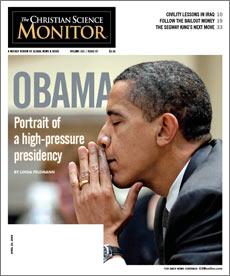
Christian Science Monitor's conversion to a magazine turning out well

A while back the story was that the venerable Christian Science Monitor was converting from being a daily newspaper to a weekly print magazine supported by a daily-updated website. At the time, there were hopes, but not much evidence, that the plan would work and stanch the losses that the highly respected publication was experiencing. Well, the results are in and, far from being yet another casualty of changing times, the CSM may be turning out to be a beacon for other publications about adaptation.
According to a report on MediaDaily News, the publication not only converted 90% of its subscribers to the new weekly/online experience, but gained a large number of new subscribers; it grew from about 40,000 when the weekly was launched to about 77,000 now. The website attracted 5 million unique visitors in March, with 14 million page views. And all without giving up any of the publication's traditional strengths of insightful reporting on social and foreign policy issues. The editor in chief, John Yemma, speculates that the publication may grow to more than 100,000 readers in a "steady, organic growth".

Labels: ,

Friday, July 10, 2009

International publishers ask European Union for copyright help

Straws in the copyright winds...

A letter written to the European Union by a group of leading European newspaper and magazine publishers on Thursday asked for enhanced copyright protection to help them generate revenue online, according to a story in the New York Times.
The publishers said widespread use of their work by online news aggregators and other Web sites was undermining their efforts to develop an online business models at a time when readers and advertisers are defecting from newspapers and magazines.
“Numerous providers are using the work of authors, publishers and broadcasters without paying for it,” the publishers said in a letter to Viviane Reding, the European media and telecommunications commissioner. “Over the long term, this threatens the production of high-quality content and the existence of independent journalism.”
Axel Springer, which publishes the tabloid Bild, has led a movement in Germany to obtain so-called "neighboring rights" for publishers, which would give them greater control over secondary use by licensing aggregators who generates revenue from their work while still allowing private individuals to access news sites without such a license.
Martin Selmayr, a spokesman for Ms. Reding, said she had not yet reviewed the document and could not comment on it. But he referred to a speech she gave Thursday in Brussels, in which she said that a top priority for developing the digital economy in Europe was the creation of “a simple, consumer-friendly legal framework for accessing digital content in Europe’s single market, while ensuring at the same time fair remuneration of creators.”
The petition has been signed by executives of News Corp., Axel Springer, Gruner + Jahr, Lagardère, Independent News & Media, the Daily Mail & General Trust, Burda Media and the Espresso Group, among others. Neither the International Herald Tribune nor its parent, The New York Times, is among the signatories.

* * *

Meanwhile, the New York Times is again actively exploring charging some sort of monthly fee for access to its main website, according to a story carried by Bloomberg News. The company circulated a survey to subscribers asking them if they'd consider paying a $2.50 monthly fee to access Nytimes.com while others were asked to pay $5.

“The question here for consumers is the psychological barrier of now paying when you were getting it for free before, and you’re going to lose some readers as a result,” said Ken Doctor, an analyst at Outsell Inc. in Burlingame, California. “The New York Times will also have to evaluate what this means for ad rates as they lose readers.”
The story pointed out that News Corp.’s Wall Street Journal charges for access to some of its Web site’s content and publishers including Hearst Corp. and E.W. Scripps Co. have said they are considering pay models. It also noted that the Times once before had a pay model for some of its lead columnists and certain editorial content with its Times Select, which generated $10 million annually and had 20,000 users, but was discontinued in 2007.

Labels: , ,

Friday, April 20, 2007

Is this the shape of things to come?

“We think the traditional publisher’s role is kind of disappearing. Advertisers are looking for integrated programs so the agencies will have one source to go to for both print and online. We are changing our structure in anticipation of that for the day that it happens. In some cases it’s happened already.”
-- Entrepreneur Media Inc. president Neil Perlman
With that, the publishers of Entrepreneur magazine in the U.S. dispensed with the traditional role of print publisher in favour of a new sales vice president on each coast, according to a story in Folio:. Eastern vice president is Bob Kelly, former publisher of Kiplinger’s Personal Finance, while former Fast Company acting publisher/advertising director Kate Rodler assumes the west coast position. Both report to VP/corporate publisher Ryan Shea, who oversees advertising across all media platforms.

Labels: , ,

Tuesday, April 10, 2007

What will the papers say?

Although it is fixated on newspapers, many magazine journalists and publishers make a point of reading the Columbia Journalism Review (CJR). Now this venerable magazine has undergone a transformative experience of its own, with a redesign showing up with its March/April issue. Of course, the cover story is a big piece by Robert Kuttner on the future of newspapers in the age of the internet.

Newspapers are embracing the Web with the manic enthusiasm of a convert. The Internet revenue of newspaper Web sites is increasing at 20 percent to 30 percent a year, and publishers are doing everything they can to boost Web traffic. Publishers know they are in a race against time, they are suddenly doing many things that their Internet competitors do, and often better.

The irony is that in their haste both to cut newsroom costs and ramp up Web operations, some newspapers are slashing newsroom staff and running the survivors ragged. At many dailies, today’s reporter is often pressed into Web service: writing frequent updates on breaking stories, wire-service fashion; posting blog items; and conducting interviews with a video camera. If journalism is degraded into mere bloggery, newspapers will lose their competitive advantage, not to mention their journalistic calling.

An equally impressive piece on a similar subject was written on the weekend by Toronto Star columnist (and former Report on Business Magazine editor) David Olive.
The ground is now shifting, and will do so at an accelerating pace over the next two or three years, as the interests of journalists and proprietors begin to diverge. Having dumbed down or at least homogenized their product, newspaper owners now are desperately trying to preserve margins – and keep impatient investors at bay – by destroying their venerable franchises with rounds of layoffs. The "content providers," worried about job security and pensions, are examining their options. So are those few proprietors who understand that you can't shrink to survival, much less greatness.

Labels: , ,

Monday, March 12, 2007

Canadian Geographic getting out of the merchandising business?

Canadian Geographic has always been among the leaders in Canadian consumer publishing in terms of developing line extensions and exploiting their hard-earned brand.

One of the areas in which they showed such leadership was in merchandising, selling everything from maple butter to telescopes and branded T-shirts. That is coming to an end, apparently, with a giant "inventory blowout" on the merchandising site which seems to confirm rumours that CG is shutting down this division. It's not known if this means that the CG "store" will disappear entirely or merely shrink back. But when you're selling your stuff at 25% to 75% off, its pretty clear it's not business as usual.

There was also some talk a while ago that CG would be launching a digital edition. That is apparently on the shelf now. Perhaps one of those shelves that are emptying at deep discount prices.

Labels: ,

Wednesday, January 03, 2007

Ranking, listing and backscratching

Starting every fall and running through to the first issue of each calendar year is the season of congratulatory lists, whereby (primarily business) magazines trumpet the 100 this, the 50 that or the 1,000 whatever. It may be some of the least-read* material any of these magazines do, but the purpose is not readership but symbiotic promotion. (*I'd be happy to see research data that shows otherwise; but my own experience is that I look at the ranks of little boxes and columns of data and simply turn the page.)

A magazine like the Report on Business knows that by running its 50 Best Employers list it will be echoed and re-echoed in press releases and promotional material from every one of the 50 'winners', thereby having a compounding benefit to the magazine's prestige as a source of solid information. But when you have a magazine like the ROB picking WalMart year after year as one of the 50 best employers and you note the fact that the company has a 25% annual staff turnover, doesn't it give pause both about methodology and veracity?

Of course, sometimes these rankings are simply databases of publicly reported financials, without spin or interpretation. But in such items as the Canadian Business "Rich List", the final number is as much art as science, since none of these tycoons is likely to share notarized statements of their net worth. More often, the ranking of companies is based on somewhat arbitrary aggregation of "scores" under various headings.

The fortunately featured companies promote themselves internally and within their industry for having been selected by a supposedly neutral third party. There are many examples where companies featured in the ROB or Canadian Business sweepstakes trumpet their selection in press releases to audiences far removed from the circulation of either magazine, in other countries or on other continents. And other media duly report the rankings uncritically and credulously.

The magazines can count on at least getting a sympathetic hearing the next year when they go to the grateful companies looking for advertising. Even a magazine like Corporate Knights banks on the fact that companies want desperately to be thought of as paragons of good governance and good corporate citizenship and will support the publications that say good things about them.

In effect, all of these magazines are in something of a conflict of interest when they accept/solicit advertising from companies grateful for having been named high up on one of their rankings.

It might be argued that prizes and rankings of this kind encourage companies to be better or do better, but surely that's absurd. Is there any company anywhere whose business plan includes strategies to move up the list of the top 50 employers? Much more likely is that the strategic plans for magazines have a section that speculates on how having such listings is a sure-fire way to build ad sales opportunities. They don't hide it, mind you.

Labels: