Wednesday, September 19, 2007

Former Osprey chief exec Michael Sifton now to run Sun Media Corporation

With the absorption of Osprey Media, its newspaper and magazines, into the maw of Quebecor Media Inc., Michael Sifton was at loose ends, we suppose. Not any more; he has been named President and Chief Executive Officer of Quebecor's Sun Media Corporation. As such, he will be running Canada's largest newspaper publishing company.

With the inclusion of the 20 Osprey dailies and 38 community papers, Quebecor and its subsidiary Sun Media has a total average daily circulation of 1.3 million and 3.4 million in circulation of 171 community papers across the country.

Sifton built up Osprey Media by acquisition starting about 7 years ago and immediately turned it into an income trust, just in time to have such trusts go south when the federal finance minister announced his intention to tax them. In fact, the Osprey Media Income Trust was in trouble before that because of competitive pressures (largely from Torstar) simply couldn't spin off enough cash to pay the distributions that the unitholders expected (and had been promised).

Sifton is the great-grandson of the legendary newspaperman Sir Clifford Sifton, who owned the Winnipeg Free Press. Mr. Sifton had been publisher of The Star Phoenix in Saskatoon and the President of the Armadale Communications Group prior to its sale to Hollinger Inc. in February of 1996. Soon thereafter he struck out on his own and assembled and managed the Osprey Media properties.

(Sifton is not remembered fondly in the west both because he sold his family's independent holdings (the Star Phoenix and the Regina Leader-Post) to Black, but also because, two days after the sale, 170 employees at the two papers were fired. The depleted ranks at Sun Media will be watching their backs.)

Mr. Sifton is a former Chairman and a current board member of The Canadian Press (he was instrumental in reorganizing the cooperative), a past director, treasurer and vice-chair of The Canadian Newspaper Association and a former director of NADbank.

Friday, June 01, 2007

Osprey Media bought by Quebecor

Quebecor Media has purchased Osprey Media Income Fund for $517 million.

Michael Sifton put together the Osprey Media chain of newspapers and magazines out of the smaller dailies and weekly newspapers and magazines that CanWest Media either didn't want or wanted to sell to pay down debt from buying Conrad Black out of his Hollinger empire. In all, Sifton's company bought 54 newspapers, including the St. Catharines Standard, Peterborough Examiner and the Kingston Whig-Standard. Along with them, he acquired some local magazines, one national title (Vines magazine) and later added the Town Media group out of Hamilton (flagship: Hamilton magazine).

He very profitably converted this tidy empire into an income trust and, for a time, was very successful, according to a story in the Globe and Mail.
Backed by venture capital supplied by the Ontario Teachers Pension Plan and Bank of Nova Scotia, the strategy was to build an empire of small Canadian papers that would churn out consistent payouts to investors. But fierce competition in Ontario from Toronto-based Torstar Corp. has sent the units tumbling nearly 45 per cent to $5.55 since their debut.

The sale brings to an end more than a century of newspaper publishing for the Sifton family. Mr. Sifton is great-grandson of Sir Clifford Sifton, a federal cabinet minister who bought the Winnipeg Free Press in the 1890s.
Stalling revenues meant that the company had to cut its distribution to unit owners in late 2006. Then it was hit with another whammy as the federal government announced that it was going to eliminate the tax advantages of the trusts by 2011. Speculation immediately began that the company was on the block and, in March, Sifton confirmed this. However the smart money was on the possibility of Torstar Corporation buying the chain to add its stronger properties to the ballooning Metroland chain. In fact, it has been fierce competition from Torstar that had helped, in part, to pare down revenues for Osprey and put it in play.

Quebecor paid the equivalent of $7.25 a share, a 30.6-per-cent premium over the closing price of the units on March 5, before Osprey announced it was reviewing its strategy.

Essentially, the purchase means that the Osprey papers will be rolled into what is sometimes called the Sun chain, although it includes Le Journal de Montreal and Le Journal du Quebec, the London Free Press as well as the Suns in Toronto, Ottawa, Calgary, Edmonton and Winnipeg. As well, Quebecor owns a chain of free daily commuter papers under the flag 24 Hours.

Labels: , ,

Wednesday, June 27, 2007

Osprey Media Income Fund still in play and the price keeps going up

The sale of newspaper and magazine company Osprey Media Income Fund looked like a slam dunk for Quebecor Media, leaving a bruised Torstar group sulking in the corner. Torstar and Quebecor have been squabbling about who did what to whom and about whether or not they had a deal to split up the Osprey properties, which include well-known dailies like the St. Catharines Standard and the Kingston Whig-Standard.

Now, through its subsidiary, Black Press of Vancouver, Torstar has topped Quebecor's bid by $1 a unit or $404.5 million compared to Quebecor's offer of $355.5 million. (Torstar owns 19.4% of Black Press.

A story in the Toronto Star says Quebecor has until July 5 to better that offer. All of which is good news for the unitholders of the Osprey Trust, but only goes so far. When it was first created the Osprey units went for $10. Even the richer Black Press offer only brings this to $8.25.

Quebecor is now crying foul, saying that Osprey had a "standstill agreement" that prevented it from seeking other buyers. Osprey says that's nonsense.

Whatever happens, a whole stable of mid-sized newspapers and magazines (including the former Town Media Group (Hamilton magazine etc.)) will be subsumed inside one or the other of Canada's print media giants.

Labels: , , ,

Monday, November 10, 2008

Sifton out at Sun Media as Peladeau consolidates control

It depends upon perception, but the announcement at the end of last week that Quebecor Inc. is integrating Sun Media and its national web portal Canoe under the leadership of Pierre Karl Peladeau, president and CEO of Quebecor meant that Michael Sifton was out.

Sifton sold his Osprey Media group to Sun Media and became its president and CEO a year ago September. Osprey brought a stable of smaller daily and community papers and consumer magazines into Sun Media. Now after disappointing financial results (sales up, but profit down), Sifton took the fall. He made a graceful exit (and his part in the spinning) when he said in a statement:
"I am happy to have been given the opportunity to integrate Osprey Media in Sun Media organization. I leave behind talented people and a strong team that will no doubt successfully take on the challenges that our changing environment is bringing"
Peladeau, or PKP as he is known, has taken over other divisions before, not always to the best effect -- for instance, Quebecor World, the printing arm of the company, which has essentially been disowned and vanished into bankruptcy protection in a welter of red ink. (See posts passim).

Quebecor reported a third-quarter profit of $45.6 million, or 70 cents a share, reversing a loss of $35.2 million, or 55 cents a share, in 2007's third quarter. Revenue rose to $908.1 million from $834.6 million.

Friday, May 11, 2007

Torstar rumoured to be looking
at Osprey Media

Speculation is increasing that Osprey Media Income Fund, which has been struggling to maintain enough profits to continue paying distributions to its fund holders, may be sold to Torstar.

A story in the Globe and Mail suggests a possible deal whereby Torstar would buy and keep (or fold) various dailies and weeklies that overlap with or fit with its own dominance in south central Ontario. The speculation is that it would sell on the rest of Osprey's properties to Transcontinental Media.

The story hinges, rather tentatively, on owner Michael Sifton's decision to skip an industry conference and stay close to home. Osprey owns a number of magazines, including the former Town Media group, formerly owned by Wayne Narcisco, which includes Hamilton magazine. Its only national magazine is Vines.

[UPDATE] A Canadian Press story Friday said that Osprey may have no choice but to be broken up if a coalition of buyers come forward with the idea of taking what fits with their particular portfolio. On the other hand, the changes in the rules on income trusts may also be giving Sifton second thoughts and he may be looking to his financial advisors to craft him a way to get out of the increasingly unsustainable income trust and into some other financial arrangement.

Sifton had said Wednesday, after the fund's annual general meeting, that Osprey is still keeping its options open, including capital restructuring, or new investment as an alternative to a sale.

The fund's board said in March it would begin the review in light of the federal government's announcement last fall on new tax rules affecting income trusts.

"The process is not just about selling," Sifton said. "It's also looking at capital structures. We're currently an income trust. Maybe there's a different type of vehicle we should be in. That's all the sort of analysis that the committee and the financial adviser will provide. "

"It's not necessarily a sale, it could be just a different capital structure."

Labels: ,

Friday, July 06, 2007

Quebecor forced to up its bid to win Osprey Media Income Fund

The unitholders of the Osprey Media Income Fund will probably put Torstar and Black Press on their Christmas card list this year. Quebecor Inc. was trying to buy Osprey for $7.45 a unit when Black came along and offered $8.25. (See previous posts. No fair, said Quebecor, we had a lock on this. Not so, said the courts. Oops, said Quebecor and upped its bid to $8.45, which will probably do the trick (and give Black Press a premium on the shares it has already acquired.
Toronto Star: Quebecor presented its new offer immediately after failing earlier Thursday to get an Ontario court to block Osprey from negotiating with Black Press. Quebecor Media announced May 31 it had a deal to buy Osprey, which owns a group of Ontario papers including some of the country’s oldest dailies. But Black Press, run by David Black — no relation to Conrad Black — announced a higher offer on June 27, sparking the court battle with Quebecor.

“I think Black Press has to realize that QMI (Quebecor) won’t let this one go,” said Adam Shine, a media analyst with National Bank Financial. “I’d be surprised to see the bidding war go higher, as these assets aren’t even worth what’s currently being offered.”

Labels:

Friday, June 29, 2007

Quebecor asks court to forbid Osprey Media from accepting higher bid

Quebecor Inc. is asking the courts to forbid Osprey Media Income Fund from considering or dealing with takeover bids from anyone else. This is aimed directly at the Torstar-backed bid by Black Press Ltd. of Victoria to up the ante for the Osprey newspapers and magazines; it topped the Quebecor bid by $1 a unit. Quebecor's application will be heard -- and defended -- at the Superior Court of Justice in Toronto on July 4.

Quebecor, which had at one point entered into an agreement with Torstar to carve up Osprey between them, says it believes that once Osprey accepted their bid at $7.25 a unit, they were at a standstill and unable to deal with anyone else (something that Osprey unitholders might disagree with when faced with an $8.25 offer from Black Press).

Osprey says its deal with Quebecor contains the customary provision that it could accept higher, unsolicited bids in certain circumstances. Clearly, Quebecor thinks this bid is not so much unsolicited as payback from the jilted Torstar (see earlier posts).

Labels: , ,

Thursday, September 27, 2012

Quebecor's Sun Media reorganizing entire English editorial operations

Quebecor Inc.has appointed Eric Morrison as senior vice-president of editorial to reorganize the company's entire English language editorial operations -- newspapers, websites and broadcast channels. Morrison is the former president of The Canadian Press.

Pierre Karl Peladeau, president and CEO of Sun Media said in a company release
"This is an important step in Sun Media's drive to deliver high quality news to Canadians, both in the multimedia environment and via our established newspapers, which continue to be the foundation of our operations."
Morrison added:
"The driving principles are to be timely, accurate, in-depth and committed to delivering the information and answers Canadians want and need."
The reorganization of editorial will parallel similar changes to advertising and manufacturing. Peladeau said.
“Our objective is to create a powerful system that not only improves our editorial products but also structures our sales and operations systems to succeed in today’s media marketplace.”
The shakeup will inevitably impact magazine properties on the English side -- including those which were acquired from Osprey Media and Town Media several years ago and are under the umbrella of the Canoe Sun Media community newspaper group. These include Hamilton magazine, Kingston Life, Vines magazine, What's Up Muskoka, Niagara Magazine and Business London.
(Quebecor's TVA Publications is the largest publisher of French-language magazines in Québec, including general-interest and celebrity weeklies and monthlies.)

Friday, December 21, 2007

The year in Canadian magazines

Canadian Magazines is taking a brief holiday, back on January 2 with a whole new year of news, notes and comments on the industry. To wrap up this year, here's an almost completely arbitrary listing of some of the things that we posted about this year, with links to the actual stories.

Best of the season to you and yours.

Make a new year's resolution to send us a tip in 2008.

January


The big dogs play nice together

Rogers and Quebecor announced an alliance whereby Rogers magazine and website content would show up on Quebecor's Canoe site.

No tag days for them, then
Masthead
magazine released a salary survey that showed the median salary for a big magazine publisher was $100,000 (and for a small/medium one $36,000).

Cover-up girl
A Toronto-based company launched Muslim Girl, aimed mostly at teens in the U.S. market. The first issue had a hijab-wearing 16-year-old girl from Tulsa, Oklahoma.

But it's a dry cold
Regina's Mayor Pat Fiacco goes ballistic over an article in Maclean's that his city contains Canada's worst neighbourhood.

So far, not so good
Six months after launching the Canadian edition of Hello!, Rogers dumps its entire team (publisher, editor and art director) and hands the magazine over to be administered by the franchise holder in Spain.

Unpaid, but undaunted
Research seems to show that Canadian magazines benefit from more than 631,000 volunteer hours a year.

Waddadeal!
Magazines Canada launched a "Buy 2, Get One Free" direct mail offer to more than 1 million Canadians on behalf of member magazines.

May contain nipples
Maisonneuve magazine had to polybag an issue in deference to the tender sensibilities of Chapters/Indigo stores to permit it to be sold on their racks. The magazine contained some tasteful nude photos.

Well-written, though
An article by an anonymous student from an unnamed journalism school said that she routinely cheated and made up interviews to fulfill her assignments.

IPA. R.I.P.
The Independent Press Association folded.

February

Asper-ation
CanWest Global Communications buys The New Republic magazine.

Less is more at Marketing
Rogers's Marketing magazine cuts its frequency to biweekly and trims its page size, putting more faith and attention to its daily online news service.

Last gasp for Toro
Toro magazine closes because its rich owner lost interest; posts its last issue online, without ads.

Big and mean
In a move that scared the wits out of small magazines, Chapters/Indigo announced that magazines would have to sell 50% of their draw if they wanted to stay on their racks.

And the silver goes to...
The Canada Council for the Arts celebrates its 50th anniversary.

March

More readers, that's good isn't it?
Hill Strategies Group reported that an analysis of Statistics Canada data showed that there were 3.2 million more readers in Canada than there were in 1992.

10 years and counting
Alberta Venture magazine, the business title that covers a booming province, marks its 10th anniversary.

Green and keen
Canada Wide Media launches Granville, a title about sustainable living for Vancouver.

Buying the sizzle
Transcontinental launches More magazine (a joint venture with giant Meredith Corporation -- Better Homes & Gardens etc.) with 70,000 subs already signed up.

It seemed like a good idea at the time
Maisonneuve
magazine of Montreal announces that it won't, after all, launch a city magazine.

No more moose mugs
Canadian Geographic announces it is getting out of the merchandise business.

Saint June
June Callwood wins the Writer's Trust Outstanding Contribution Award. Best known as a campaigner for the disenfranchised, the longtime freelancer told the crowd her proudest accomplishment was to be a journalist and said: If any of you happens to see an injustice, you are no longer a spectator, you are a participant and you have an obligation to do something.
Callwood died in April.

The doyenne of Chatelaine
Doris Anderson, who turned Chatelaine magazine into one of the most successful magazines in Canada in the 1960s and '70s, dies age 85.

April

Online and on a tear
Online advertising tops $1.1 billion in Canada in 2006, according to the Interactive Advertising Bureau of Canada.

Guess what we're thinking
The Canada Council was roundly criticized for changing the rules for its Supplementary Operating Funds initiative in mid-process, then lamely saying that the changes were published on its website. After asking people to "think big" and being overwhelmed by applications, the result was that many applicants "got small"; asking for $50,000 and getting $10,000.

Once the smoke had cleared...

A new open-source online medical journal called Open Medicine springs from the aftermath of the firing of the editors of the Canadian Medical Association Journal.

Peeling away
Rob Laidlaw and Jessie Rasch sell their extremely successful Modified Automotive Group to Primedia for an undisclosed sum.

Toronto Life
's name in lights
St. Joseph Corporation buys the naming rights to the intersection of Yonge and Dundas Streets in Toronto and dubs it Toronto Life Square.

Big payday for Brunico
Brunico Communications Inc., publisher of Strategy, Playback and Media in Canada, is sold to a group of private investors for an estimated $10 million.

May

A standup guy

Maclean's editor and publisher Ken Whyte testifies as a character witness at the trial of his old National Post and Saturday Night proprietor, Conrad Black.

Hook, line and merger
Ontario Out of Doors (Rogers) decides to merge its Spring Fishing Show with the Canadian National Sportsmen's Show.

Always with his hand up
Terry Sellwood, the general manager of Quarto Communications (Cottage Life, explore) and former president of the National Magazine Awards, is named Volunteer of the Year by Magazines Canada.

Maybe the magazines just got heavier
A report by Michael Fox for Magazines Canada reports that Canada Post's margins for delivering magazines slid to only 4% because of an astonishing 10% increase in costs.

The lure of the open road
Bill Shields, the editor of Masthead magazine, resigns after six years to spend time travelling around and motorcycle racing.

June

Selling and buying
Quebecor Media buys Osprey Media Income Fund for $517 million.

Young and fuelish
Venture Publishing announces the launch of unlimited, a business magazine for the young and hip of Alberta, and elsewhere.

Double-booked
Both MagNet (Magazines Canada etc.) and Magazines University (Canadian Business Press and Masthead) hold industry conferences within weeks of each other.

Fair dealing
The first rumblings of discontent emerge about differential pricing between Canada and the U.S., as the loonie gains ground.

Best face forward
Maisonneuve
wins best of show at the annual newsstand awards.

R.I.P.

Beloved circulator Terri DeRose dies.

Up is the new down
A study shows that the magazine and newspaper trade deficit with the U.S. has grown by 18% since 2000.

July

They like us, they really like us
The Canadian Business Press cuts a membership deal with its American counterprt, American Business Media. Under the deal, CBP members get passwords for the ABM site and access to various deals and benefits.

Print is so yesterday
Digital Journal magazine goes wholly online.

Sara, we hardly knew ye
After only 13 months on the job, Sara Angel departs Chatelaine.

It's an honour just to work here
The Walrus magazine internships -- originally among the most generous in the business -- switch to unpaid when Metcalfe Foundation funding ends.

Timmies on us!
The Canada Council receives a permanent $30 million funding increase.

Take it out in trade
The Professional Writers Association of Canada starts an online store to sell mugs, t-shirts and bumper stickers.

The rats aren't too happy, either
Maclean's
cheeses off lawyers by calling them rats on its cover.

What didn't you understand about "worst"?
The Beaver's contest to find The Worst Canadian backfires somewhat when people flood the site and name former Prime Minister Pierre Trudeau.

August

Jim takes it easy
Jim Ireland, the well-known art director for many Canadian magazines, sells his shop , retires and gets some time for painting.

Please allow six weeks for delivery
Magazines Canada's second direct mail campaign on behalf of participating member magazines sells a record 10,000 subs.

Trading places
Marco Ursi is named editor of Masthead magazine, replacing Bill Shields (see May).

Madame Minister Meets Magazines
Josée Verner, formerly Minister of International Co-operation and Minister for La Francophonie and Official Languages is named Minister of Canadian Heritage, responsible for the Canada Magazine Fund and PAP. Her first question? What's PAP?

Pass the K.D.
Redwood Custom Communications loses the account to produce custom magazines What's Cooking (Canada) and Food and Family (U.S.) for Kraft Foods. Layoffs ensue.

Flare gets a makeover
Flare magazine unveils a new look with its September issue.

Block that error
Cynthia Brouse publishes what we think is the first Canadian textbook on fact-checking (or is that fact checking?).

September

Espace
Spacing magazine launches a Montreal blog, complementing its Toronto version.

Singles and available

Canadian Living and Canadian House & Home are best Canadian newsstand performers in a list compiled by Coast to Coast Distribution Services.

Not so sweet
Rogers venture into a partnership with Canada Post, using its lists of people who recently moved, ends with the closure of Chocolat. Move they did. Subscribe? They did not.

Explanation for the nation
Christopher Moore in the Literary Review of Canada, tries his best to explain the many nuances of the decision in the case of Robertson vs. Thomson et. al. Freelancer Heather Robertson has spent 10 years fighting for the right to be paid by publishers who put her stories in databases and online.

Single and substantial
The Canadian single copy magazine market is demonstrated to be 13% of the North American single copy market, the first time that figure has been known.

Miss you already, John
John Macfarlane announces he will be stepping down after 15 years as editor of Toronto Life; to be succeeded by Sarah Fulford.

Osprey dives into the sun
Former Osprey Media Income Fund CEO Michael Sifton takes over as CEO of Sun Media after his company is swallowed.

No chicken neck yet
Fashion magazine celebrates 30 years.

October

Our man in Toronto
Rogers Media announces that it is going to sell ads in Canada for Hearst Magazine online properties.

Indas morphs into CDS
Indas Limited, one of Canada's two major fulfillment companies, which has been owned for a while by CDS Global, is rebranded to make it official.

What rhymes with 40?
Malahat Review marks 40th anniversary by celebrating work of co-founder Robin Skelton.

The right has left
The Western Standard folds its print edition; may carry on online.

Here's your list, what's your hurry?
Canadian Geographic lets its entire circulation department go, on top of other recent departures and the closing of its merchandising division.

But who's counting?
Ontario gets its 6th culture minister in 7 years.

Getting the lead out
Consumer advocate magazine Protégez-Vous
beats back an attempted injunction to stop it publishing a story that say MegaBlocks toys have lead in them.

Bedside companion
Harrowsmith Country Life publishes an "all Canadian" almanac. Sells out 100,000 and reprints.

MARD?

Marketing and CARD merge their staffs.

Crosstown trip
Andrew Coyne the columnist leaps from the National Post to Maclean's.

Bad enough that I don't get paid...
Readers get to vote on applications for online interns at Flare.

November

Someday my print will go
Quebecor World sells its perennially troubled European printing division. [Within weeks, the deal falls through.]

Mazel tov
Former Toronto Life art director Carol Moskot and her husband, former ad agency guy Daniel Zimmerman, launch Jewish Living in New York to some acclaim.

CP Gone
The Canadian Press retires its CP symbol.

Not what we had in mind
Universities, many of whom were boycotting the whole business, howl because Maclean's changes its methodology for its university rankings and their standings fall.

Sneaky
This blog reveals that some U.S. publishers are using split run covers to remove U.S. prices and keep higher Canadian prices instead, despite the soaring loonie.

No more Mr. Nice Copy
Access Copyright sues Staples for $10 million for copyright infringement because it won't police profligate use of pay-as-you-go photocopiers.

Depressing news
Two, competing, magazines about depression are to be launched in the spring; one from each of the former partners in Schizophrenia Digest and BP magazine.

Fine-tuning the Magawards
The National Magazine Awards Foundation board approves a bunch of changes.

We're outta here
Rogers announces that it is pulling its trade magazines out of membership in the Canadian Business Press.

December

Et, voila!
Quebecor's TVA magazines join Magazines Canada, adding a much needed boost of French titles to the national association.

It pays to advertise
A special 6-month promotion called the Best of B.C., co-ventured by the Periodical Marketers of Canada and the British Columbia Association of Magazine Publishers, resulted in a 7-fold increase in sales.

Dinged by Disticor
Disticor Direct increases its fuel surcharge by 20%, without notice.

Zoomer moves
Bonnie Baker Cowan, the editor of CARP, the magazine for the 5o-plus, has resigned, following the takeover of the magazine and the parent association by Moses Znaimer.

Vive le difference
The Beaver magazine publishes for the first time in both English and French editions, marking the 400th anniversary of the founding of Quebec.

Wish it hadn't happened?
In a bizarre twist, the reader forums of Wish magazine (St. Joe's) is hacked by radical Turkish nationalists.

Little gone books
Toronto Life discontinues its "little red books", the outserts that were polybagged with each issue. The decision is coincident with the departure of the man who invented them, editor John Macfarlane.

Labels:

Thursday, November 06, 2008

Town Media's 26 magazines switch
to forest-friendly paper

Town Media, the publishers of Hamilton magazine and Vines (among others) this month will begin using only forest-friendly paper for printing 2.6 million copies annually of 26 magazines, making it the largest magazine publisher in Canada to use paper certified by the Forest Stewardship Council of Canada (FSC).

The company, based in Burlington, Ontario is the magazine publishing division of Osprey Media Group LP, part of the Sun Media network, itself owned by Quebecor Inc. (phew).
"The use of the FSC-certified paper is a major environmental advance for our publications and aligns us even more closely with the expectations of consumers and advertisers for responsible use of resources," said Sheryl Humphreys, Associate Publisher of Town Media in a release. "The magazine-offset paper maintains our high quality standards at the same time as improving the environment."
The paper will contain 30% post-consumer recycled content.The FSC-certified paper for the magazines is produced by New Page Corporation in the U.S. and Condat of France. The magazines, which are printed in Richmond Hill and Aurora, also use soy-based inks as do all of Sun Media's daily newspapers.
Antony Marcil, President & C.E.O of FSC Canada, part of the international organization that promotes environmentally appropriate, socially beneficial and economically viable management of the world's forests. "This largest single corporate commitment to FSC paper in the Canadian magazine industry should be celebrated by readers, advertisers and the public in general."
The magazines are: Biz; Business Niagara; CFB Directory; Conference Kingston; Golfstyle; Hamilton Magazine; Hamilton Interiors; Key to Kingston; Key to Niagara; Kingston Life; Kingston Visitors Guide; Kingston Interiors; Niagara Magazine; Niagara Magazine-Interiors; Niagara Seasons; Niagara Weddings; Ontario Golf; Ontario Home Builder; Ontario Home Builder Directory; Relocation Guide; The Bride Guide; Vines; Visitors; Welcome Back - Niagara; Welcome Back - Kingston; Welcome Back - Ottawa.

Wednesday, May 07, 2008

Quebecor Media Q1 profit jumps 42.7%

Quebecor Media, the magazine, cable, new media and newspaper arm of Quebecor Inc. has announced an increase of its first quarter profit by 42.7 per cent to $58.8 million. It posted overall revenues of $877.1 million in the first quarter of this year, up 16.8 per cent over the same period last year.
"Once again, the excellent results were driven by sustained growth in the cable segment, which continued to register healthy customer increases in all its lines of business," said Quebecor Inc. president and CEO Pierre Karl Peladeau in a statement.
The 21.4% bump in revenue at its newspaper and magazine segment was largely due to the acquisition of Osprey Media, a deal which closed in August 2007. Revenues increase 21.4 per cent to $267.4 million. First quarter revenue in the cable segment climbed 20 per cent to $430.6 million thanks to an increased number of customers and rate increases.

Quebecor Media is a 54.7%-owned subsidiary of Quebecor Inc.

Labels:

Tuesday, September 13, 2005

Osprey swoops down and swallows Town

With all the kerfuffle about income trusts, very little of it has seemed to touch magazine publishing so far. But quietly, over the summer, a few quite good magazines were absorbed into the Osprey Media Income Trust, with its purchase of Town Media. Town's longtime President and Publisher, Wayne Narcisco, brought with him into the management fold the following titles: Hamilton Magazine, Biz,Visitors, Interiors, Ontario Golf, Golfstyle and Ontario Home Builder. Also absorbed were Town's trade show division, inclduing the Ontario Garden Show, Gourmet Food & Wine Show, Ontario Builders' Forum and a part interest in the Hamilton Better Living Home Show.

Because it hasn't worked in the spotlight in Toronto, Town has not known very much buzz since Narcisco founded it in 1978. He has steered the little ship through good times and bad and has now, apparently, cashed out (or is that in?)

Hamilton magazine has consistently been professional and quite handsome, a surprise to people who think of Hamilton (the city) as a pretty lunchbucket kind of place. But there is a lot of high end housing and a lot of wealth in the area and the magazine catered to it with a healthy dose of lifestyle/shelter and fashion as well as the usual citymag features and listings.

Since Osprey needs to keep on pumping out those payments every month (one of the attractions for investors in income trusts) the purchase must have been predicated on the maturity of the properties and their ability to contribute to those relentless payouts.

But, once again, a mid-rank magazine company is swallowed up by a bigger firm (last time it was Avid by Transcon), leaving a big hole where entrepreneurial, well-financed and innovative magazine publishing should be.

Friday, June 22, 2007

Carving up Osprey Media turning out messy for Quebecor and Torstar

A cosy deal to carve up the Osprey newspaper and magazine empire seems to have gone badly awry as Torstar Inc. has cried foul about Quebecor Corp.'s purchase of all the assets, including such venerable newspapers as the St. Catharines Standard and the Kingston Whig-Standard and a clutch of magazines.

According to a story in the Globe and Mail, the two conglomerates agreed in late 2005 to divvy up the titles; Quebecor later backed out of the deal, or says it did. But in filings by Quebecor with securities regulators, Torstar is said to be contending that Quebecor didn't terminate the agreement and Torstar continues to have the right to acquire pieces of Osprey. Torstar has refused to comment.
Though Torstar isn't named specifically in the filings, Quebecor confirmed yesterday Torstar is the company referred to as "the Joint Bidder" in the regulatory filings.

The regulatory filings indicate Quebecor chief executive officer Pierre Karl Péladeau and Torstar CEO Rob Prichard sent numerous letters to each other arguing the matter.

"The chief executive officers of the Joint Bidder and [Quebecor] exchanged several letters wherein the Joint Bidder asserted that [Quebecor] had not terminated the 2005 agreement," the documents say.

"In the course of 2006, [Quebecor] considered several new proposals put forward by the Joint Bidder relating to [Osprey], but none of these resulted in any new agreement."

Sources indicate Torstar is arguing that the wording of a letter sent by Quebecor announcing it was pulling out of the agreement suggested the two sides would be working together in the future.

Torstar has interpreted that as an indication the Osprey agreement is still intact.

Labels: , ,

Wednesday, November 01, 2006

Income trust rule changes
will affect magazines

No matter what happens on the financial markets this morning as a result of the government's surprise decision on income trusts (taking away much of their tax advantages) it will impact the magazine industry. As but two examples (some readers may suggest others), consider Rogers Media, which had recently become a partner with Aeroplan, the Air Canada points system, an income trust that was allowing purchase of magazine subscriptions using points. And Osprey Media, Michael Sifton's clutch of small newspapers and magazines, which has been struggling to meet its payouts even with the previously favourable rules and must now be faced with reconsidering the whole idea.

This income trust announcement probably won't take the gloss off the results announced by Rogers yesterday, in which its third quarter results were up 14.7% and profits up 33% and the company announced a stock split and a hike in its dividend. (It announced that even its media holdings were up 12.2%, but keep your shirt on, much of that was not the result of a surge in magazine publishing but the result of ad revenue associated with the World Cup of Soccer and Blue Jays baseball on Sportsnet.)

Labels:

Tuesday, March 06, 2007

Osprey on the block

Osprey MediaIncome Trust, the holding company for many small newspapers and magazines, has been struggling to retain investor interest in the face of declining distributions. This was not made easier by the government's decision to begin taxing income trusts in a few years.

According to a story in the Globe and Mail and a release by the company, the board of the trust has decided "to proceed with a process to consider and review strategic alternatives that may be available to Osprey to enhance unitholder value" -- in other words, to shop the company around. Likely that two of its largest shareholders -- Ontario Teachers Pension Plan and the Bank of Nova Scotia -- are pressing the issue and would be interested in selling at the right price, somewhere north of some $5 per unit offers that are rumoured to have been on the table for some time now.

The price of the company's units have dropped about 45% since its inception and is now about $5.55. Osprey's original strategy, which was to build a small empire of small newspapers (many of them snapped up after Conrad Black's breakup of Hollinger) and magazines that would spin off regular payments to investors. That's clearly not going to work, now. A tough advertising market meant the company was unable to keep up the cash distributions. One of the possible buyers for the Osprey properties could be Torstar, whose fierce competition in various markets is one of the reasons why the company is in the fix it is.

Osprey bought Town Media, publishers of Hamilton magazine, in 2004; the only national magazine it owns is Vines.

For background on this story, look at earlier posts here and here.

Labels: ,

Wednesday, July 11, 2007

Quebecor withdraws bond issue it planned to use to buy Osprey

One of the ways that Quebecor was going to pay for its purchase of Osprey Media Income Fund was to sell a junk bond issue. But the company has cancelled plans to float a $750 million issue in the face of what's described as "a jittery junk bond market", according to a Reuters story. Quebecor's timing could hardly have been worse, having announced its plans only a day before there was a sharp selloff of so-called "junk" or high-yield bonds as U.S. investors worried about weakness in the U.S. sub-prime mortgage market.

Not only was the Osprey sale to be financed in this way, but so was its plan buy all of the common shares of Nurun it did not already own, and to make a payment to the Carlyle Group.

Labels: ,

Thursday, February 22, 2007

Osprey continues to struggle with ads
and unit value

Osprey Media Income Fund, an owners of small daily and weekly newspapers and small magazines, has written down about$170 million of its value, blaming a slumping advertising market, particularly automotive.

The company has seen the price of its units steadily erode, threatening its ability to make the kinds of distributions that keep people happy with income trusts. Last fall, the value of its units fell by 15% when the federal government announced that such trusts would be taxed, starting in 1011. Yesterday, the value of the units was $5.73, which is half what they once were. So far, the company is still paying out about $0.64 cents a unit, but there is some question about how long that can continue, given the 2006 loss of $113.4 million.

Osprey president and CEO Michael Sifton shone the brightest light he could on the situation by noting that the company had been able to post revenue growth of $7.2 million, or about 3.4 per cent for the year.

See earlier post about this company.

Labels: ,

Wednesday, February 22, 2006

Osprey pays, but it's getting harder

Osprey Media Income Fund continues to pay unitholders about 9 cents a unit according to its year-end financials just released. However, the newspaper and magazine chain, headed by Michael Sifton, appears to be struggling to keep up the payments.

According to the data released as of December 31, 2005, the company had net income for the year of $23.6 million and was carrying forward a deficit from the year before of $14.4 million. Distributions to unitholders totalled $44 milion, leaving the company with a deficit at the end of the year of $34.8 million. In other words, the company's properties are not churning out as much cash as the the company feels obliged to distribute to its unitholders.

This is one of the significant downside risks of unit trusts, which retail investors buy in order to achieve a steady stream of income. But in a business like this, that is subject to ups and downs of the marketplace, particularly advertising, it is sometimes hard to keep that payout tap open.

Osprey owns a chain of community newspaper and magazines, mostly in southern Ontario including 21 daily newspapers (paid circulation), 38 non-daily newspapers (both paid and unpaid circulation), 7 shopping news (unpaid circulation) and48 magazine and specialty print publications (both paid and unpaid circulation), as well as 20 small and mid-sized telephone directories. A post last year detailed the purchase of the Town Group, including Hamilton magazine. The only national magazine it owns is Vines. Most of its other magazine titles are small, one-city or regional in nature. The majority of the company's income comes from its newspapers.

Wednesday, February 18, 2009

Local papers merged, local focus lost

One of the valuable things lost in the headlong corporate consolidation that characterizes Quebecor Media is the hometown and local character of its newspapers. This is no better illustrated than by the decision to merge three, venerable local papers in eastern Ontario, formerly part of the Osprey Media chain, into one.

According to a post on a Sun-expat website, the Cobourg Daily Star, founded as a weekly in 1831; Port Hope Evening Guide, founded in 1878 and Colborne Chronicle, founded in 1959 from the ashes of the Colborne Express, 1866, and the Colborne Enterprise, 1886 have now been replaced by Northumberland Today. To add insult to injury, the 16-page daily now costs $1.25, up from the $1 Cobourg and Port Hope readers were paying.

Thursday, April 13, 2006

Torstar muscles in

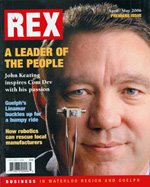
The Record newspaper based in Kitchener has launched a 15,000 controlled circulation business magazine called Rex. Not such an unusual event for the City Media Group of Torstar, which owns the Toronto Star, Record, Spectator, indeed the entire Golden Horseshoe of dailies around the western end of Lake Ontario. But this launch, like the launch of a lifestyle magazine in Hamilton, is somewhat different since it is predatory.

The products take on such longstanding titles as Hamilton magazine (owned now by Osprey) and, in the case of the Waterloo Region market, a long-established independent business magazine called Exchange, published by the Jon R Group. The flexing of Torstar's muscles in the markets that it dominates, seems to be calculated to drive out the established titles and give it a monopoly not only in newspapers but in glossy print. Fortunately, the magazines are somewhat banal and generally not very good,by and large. Perhaps readers won't be diverted. But it is hard in a low-margin business like a regional publication to stand up to the clout of a Torstar.